
Can a chiropractor help with TMJ and jaw tension?
Some chiropractors assess and manage jaw (temporomandibular joint, or TMJ) discomfort as part of musculoskeletal care. At Restored Living, your first visit focuses on understanding what's going on — your history, how your jaw opens and closes, and how your neck and posture may relate to your concern. If chiropractic care is appropriate, we'll explain the options. Where it would help, we'll suggest working alongside your dentist or another practitioner.
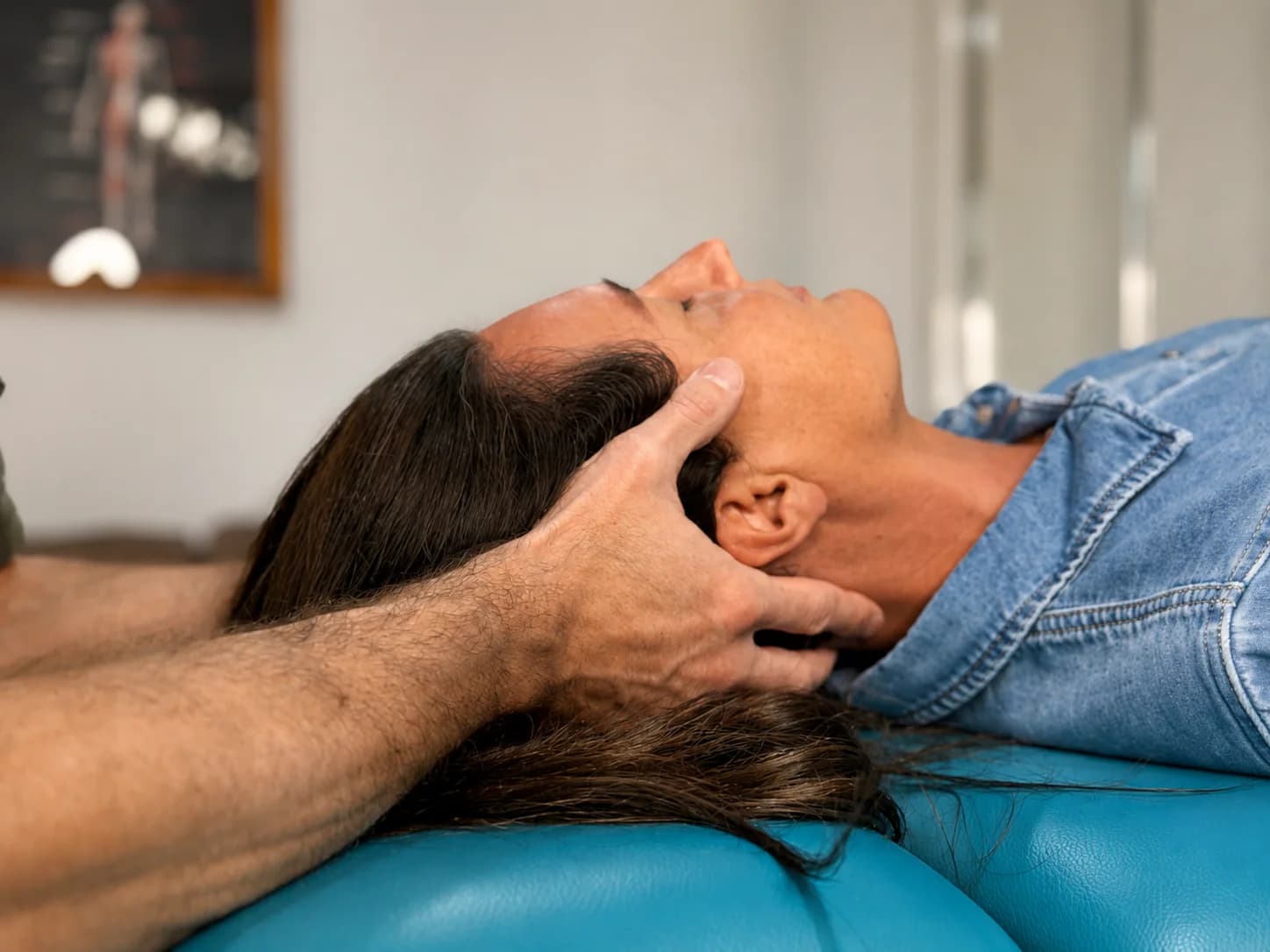
What people often describe
- Clicking, popping or grating when opening or closing the mouth
- Tightness or aching around the jaw, cheeks or temples
- A jaw that feels tired after chewing or talking
- Clenching or grinding, often noticed on waking or during stressful periods
What we may assess
Every assessment is guided by your presentation. For jaw tension it may include:
- Your history — onset, clenching or grinding habits, dental history and stress
- How your jaw opens, closes and moves side to side
- The muscles around the jaw, temples and neck
- Head and neck posture, and how the upper neck is moving
- Whether a dental or medical review may be worthwhile
Looking beyond the jaw
Jaw discomfort is the starting point — and we take it seriously. Alongside it, we consider posture, structure and movement through the neck and upper back as parts of the broader picture. Where patterns of tension seem linked to stress, we may talk about that too, as one consideration among many. Read about our approach.
When to seek urgent medical care
Jaw tension is usually not serious, but some symptoms need prompt attention. Call 000 for chest pain spreading to the jaw. Otherwise, contact your GP or dentist promptly if jaw symptoms come with:
- Chest pain, pressure or shortness of breath with pain spreading to the jaw, arm or neck — call 000
- A jaw that is locked open or closed
- Swelling of the face or jaw, fever, or a suspected dental infection
- Numbness or tingling in the face
- Jaw pain after a blow to the face or a fall
Book a jaw assessment
Private studio in Casuarina · Longer initial consultation
Common questions
Should I see my dentist first?
If you have tooth pain, a suspected dental issue or you grind your teeth at night, your dentist is a good first step. Many people see both, and we're happy to work alongside your dental care.
Why would you look at my neck for a jaw problem?
The jaw, upper neck and head posture are closely related, so we commonly assess them together. It helps us understand your jaw concern in context.
Do I need a referral?
No — you can book directly. If you've had a dental assessment, splint or imaging, bring along any information you have.